Getting Your Fireplace Ready for a Wisconsin Winter
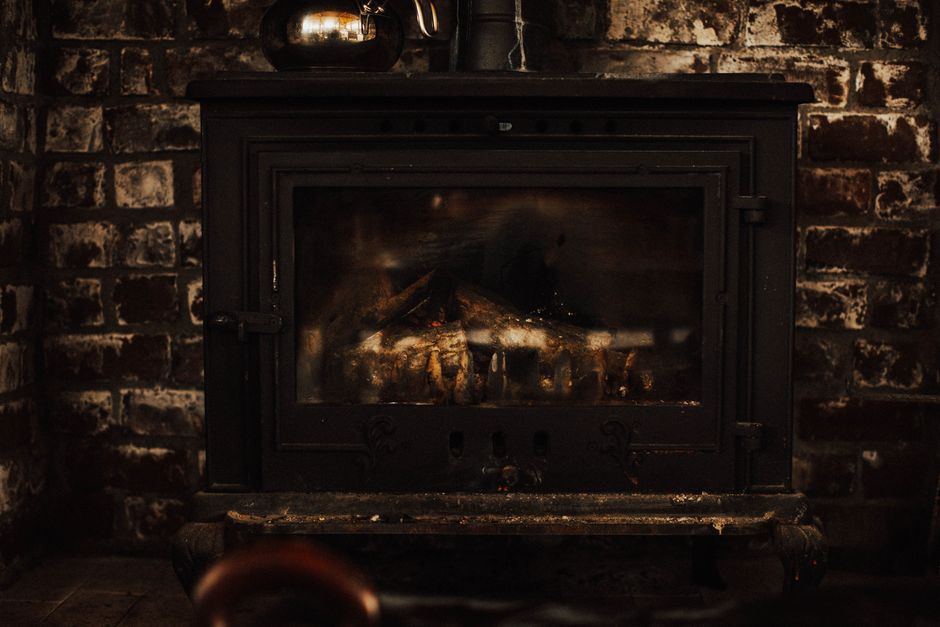
La Crosse doesn't ease into winter. The National Weather Service's average frost-date guidance for the La Crosse area puts the average first fall frost in the first week of October and the average last spring frost in the first week of May, which leaves a long stretch of the year where a fireplace or wood stove is doing real work rather than sitting idle. Getting the chimney ready before that stretch starts is a matter of timing as much as anything else.
How cold, and for how long
NOAA's 1991-2020 climate normals for the La Crosse municipal airport station give a sense of what "heating season" means here. La Crosse's mean daily temperature for the year is 48.8°F, but the coldest months pull that average down hard: January averages 18.9°F, February 23.3°F, and December 25.1°F. Across the year, the station averages 6,788 heating degree days (base 65°F) — a measure of total heating demand — with January (1,427.4), December (1,236.8), and February (1,166.2) accounting for the largest share of it. On an average of 140.8 days a year, the overnight low drops to 32°F or below; on 19.6 days a year, it drops to 0°F or below. January alone averages 29.7 such sub-freezing nights and December 28.0 — essentially both months in full, according to the same 30-year normals.
What that means for a fireplace or wood stove: once the season turns, it turns hard, and it stays that way for months, not weeks. A chimney that's going to see months of near-continuous use, night after night, benefits from being checked before that use starts, rather than partway through the coldest stretch of the year when a problem is hardest to schedule around.
Best time to schedule a pre-season sweep and inspection
NFPA's own homeowner safety guidance is direct about the timing: "Chimneys and heating systems should be inspected and cleaned each year before they are fired up for the season" (NFPA, Safety with heating equipment). That standard doesn't change based on how much the fireplace gets used — NFPA 211 calls for chimneys, fireplaces, and vents to be inspected at least once a year "for soundness, freedom from deposits, and correct clearances" regardless of use, per CSIA's summary of the standard (CSIA, Homeowner Resources).
Given La Crosse's average first frost in early October and the sharp jump in heating demand that follows through December and January, scheduling a chimney sweep & cleaning in September or early October — ahead of the frost, not after it — avoids doing the work after the chimney has already been pressed into service for the season. How often that sweep needs to happen in the first place depends on how the fireplace or stove gets used; see how often to sweep your chimney for what drives that frequency.
Check the cap and crown before the freeze sets in
A chimney cap & crown repair check belongs on the same pre-season list as the sweep itself, and for a straightforward reason: the cap is what keeps rain, snow, and animals out of the flue, and the crown is the concrete or masonry surface that sheds water off the top of the chimney structure. With La Crosse averaging close to 141 sub-freezing nights a year, water that gets into a cracked or aging crown has plenty of opportunity to freeze, expand, and widen existing damage before spring — a cycle that tends to get worse, not better, once cold weather sets in. A crown or cap that has a small crack or gap going into November is more likely to have a bigger one coming out of a Wisconsin winter than going in. Checking it in the fall, while repairs are still straightforward, is easier than dealing with a compromised cap or crown once the ground has frozen.
Why this matters even for a fireplace that doesn't get used every day
None of this depends on burning wood constantly through the winter. CSIA's own guidance is that even a chimney that's used lightly can develop problems between inspections: "animals may build nests in the flue or there may be other types of deterioration that could make the chimney unsafe" (same CSIA source). A chimney that sat mostly unused last winter isn't necessarily in the same condition it was the last time anyone looked at it — nesting, debris, or weather damage can happen regardless of how often the fireplace gets lit. The annual-inspection standard applies "regardless of how often the appliance is used," which is the reason a pre-season check makes sense even for a fireplace that only gets occasional use on cold nights, not just for one that runs all winter.
A fireplace that only gets lit on the coldest nights is still sitting through the same freeze-thaw cycle and the same months of exposure as one that runs constantly — the chimney itself doesn't know the difference. Skipping a pre-season check because the fireplace "barely gets used" just means whatever developed over the past year — a nest, a loosened flue tile, a hairline crack in the crown — goes unnoticed until the first cold night it's actually needed.
Getting ahead of the season
Between the sweep, the inspection, and a look at the cap and crown, there's a reasonable amount to get through before the weather turns — and La Crosse's climate normals suggest the window to do it without rushing is shorter than it might seem, given how quickly heating demand ramps up once October arrives. Handling it before the first frost, rather than after, is the difference between routine maintenance and a cold-weather scramble once the coldest months of the year are already underway.